GST
Learn how GST is calculated, displayed, and reported across costs, invoices, and financial summaries.
- How does Commonview manage GST?
- Managing GST registration status
- Accounting for GST in provisions and outgoings
- Accounting for GST in cashflow
- GST and contributions
How does Commonview manage GST?
Commonview supports both GST registered and non-registered body corporates. It also allows administrators to change their body corporate's GST registration status at any time.
Non-registered body corporates
Commonview recognises that GST paid to suppliers are a legitimate expense for body corporates, and therefore includes the GST cost in the calculations of cashflow and contributions, but does not add GST to the contributions required to be paid by body corporate members.
Registered body corporates
As a GST registered body corporate, GST paid to suppliers are not recognised as an expense to body corporates as the amount will be offset by any GST charged by the body corporate and the net GST paid to the Inland Revenue. As a result, GST (paid and received) is excluded from cashflow and contribution calculations. GST will be added on top of the calculated contributions that the body corporate members are required to pay.
Managing GST registration status
Set GST registration status on signup
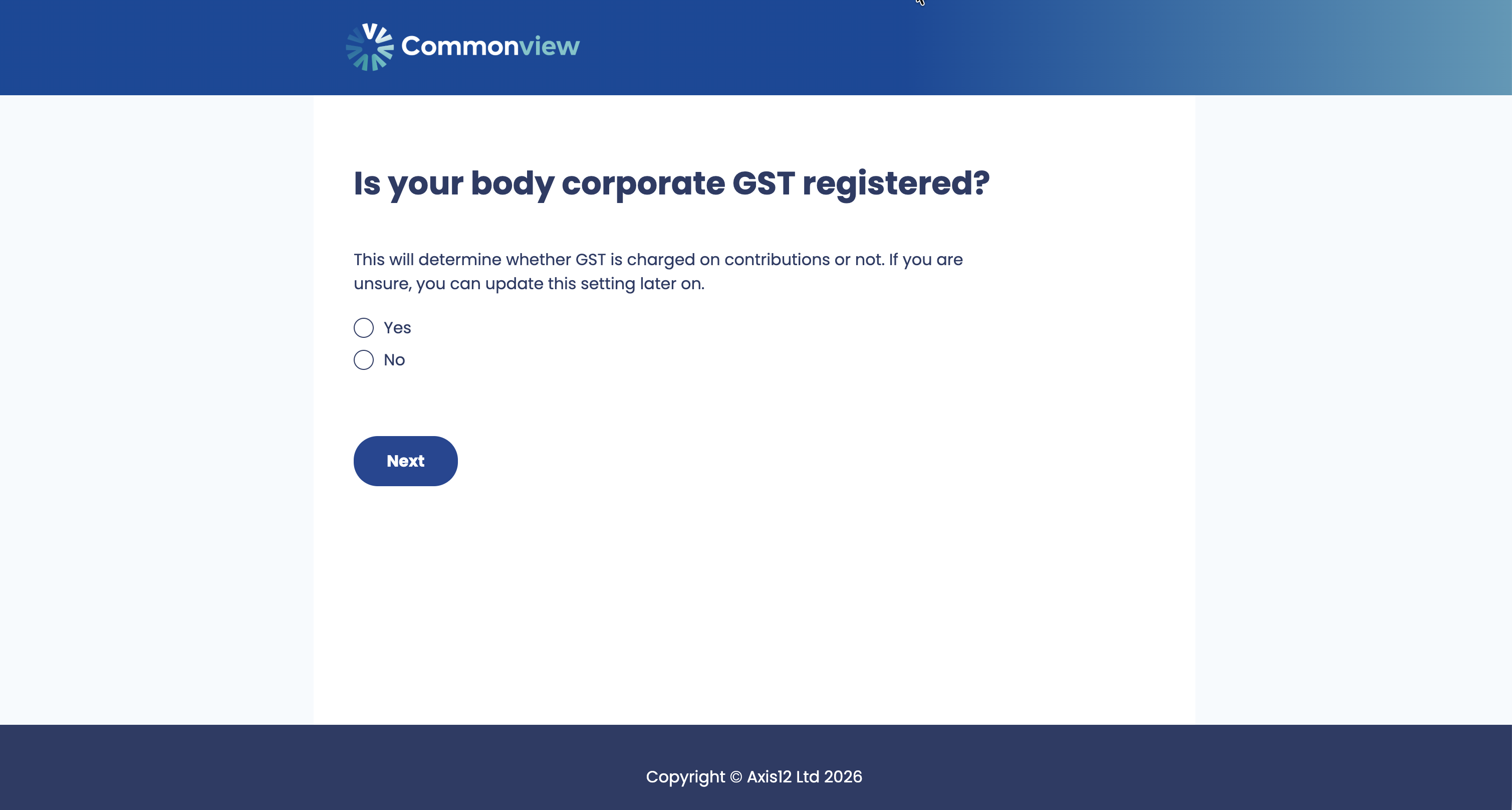
During the signup process, you will be asked to confirm whether your body corporate is registered for GST or not. Your answer will determine how contributions are calculated and whether or not GST should be charged to unit owners.
Updating registration status
To change this setting after signup, please go to the Settings page.
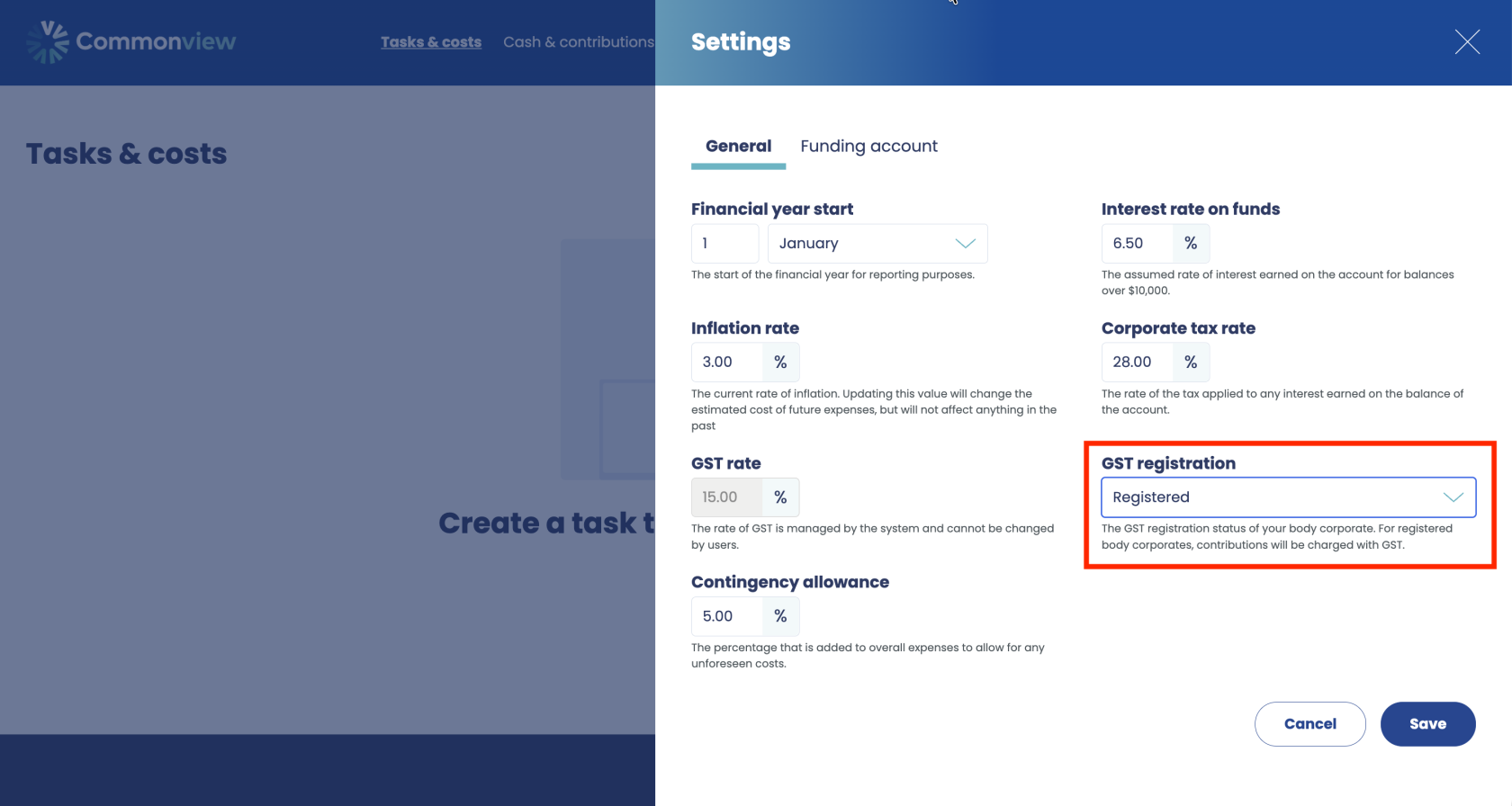
If you change the registration status, all current and forecast contributions will be automatically recalculated, but any approved years will not be affected.
Accounting for GST in provisions and outgoings
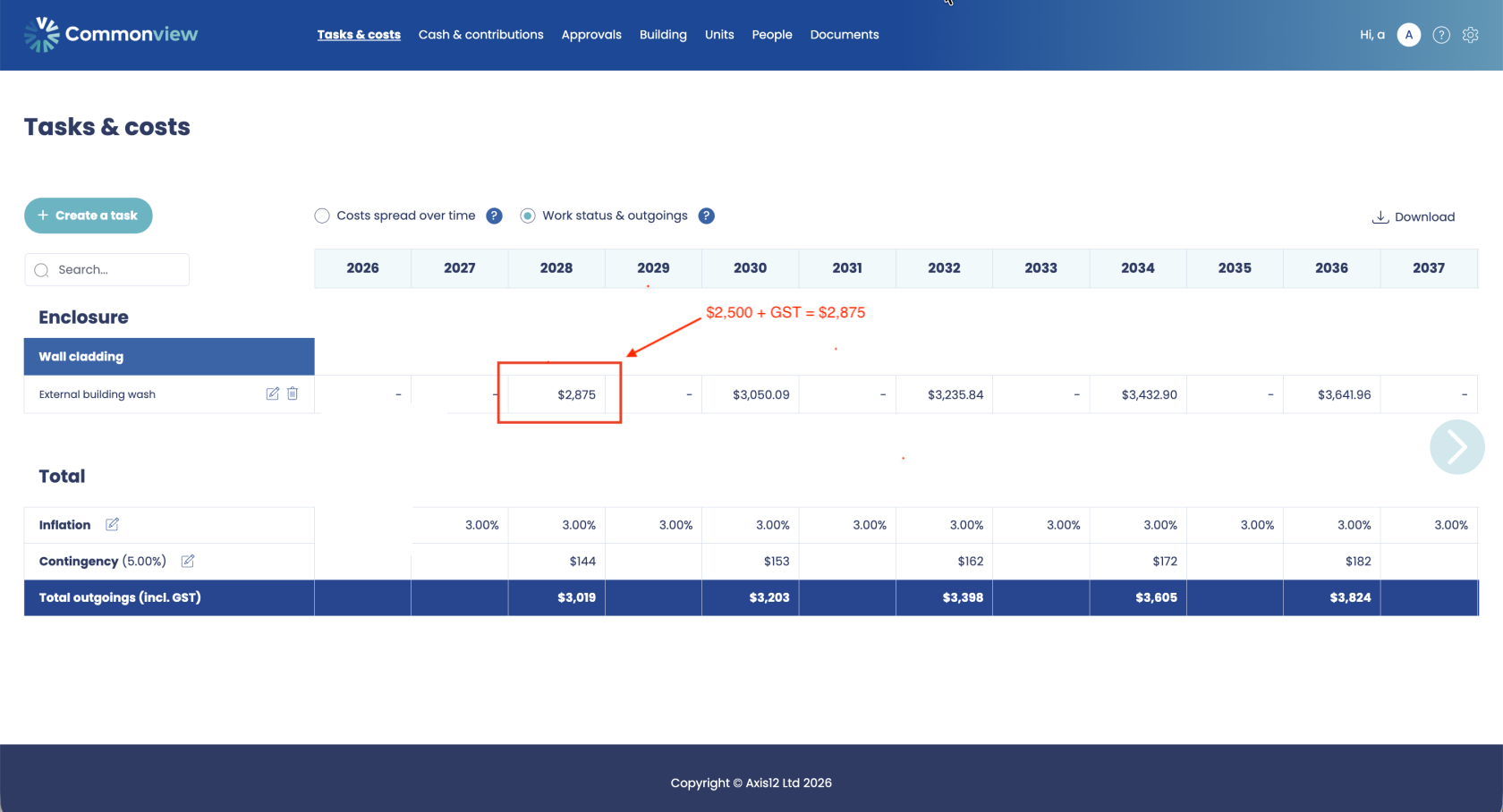
By default, Commonview applies GST to all maintenance expenses and provisions. This is regardless of whether your body corporate is registered for GST or not.
When you create or edit a maintenance task, you will be asked to input the forecast cost as GST exclusive.
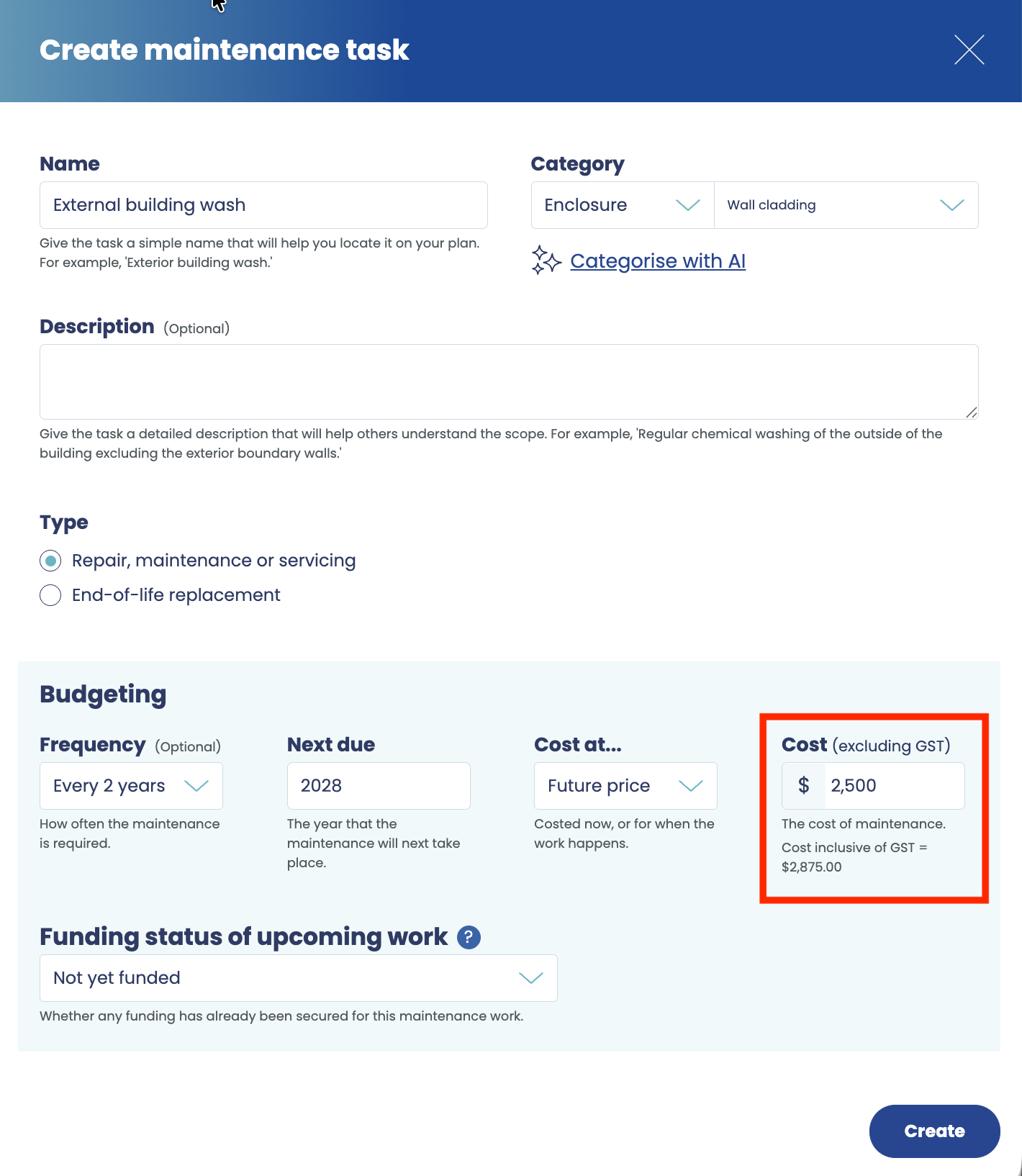
Commonview will calculate the GST inclusive cost, and apply it to the tasks and costs table.
Accounting for GST in cashflow
Depending on whether your body corporate is registered for GST or not, the cashflow table will display different amounts.
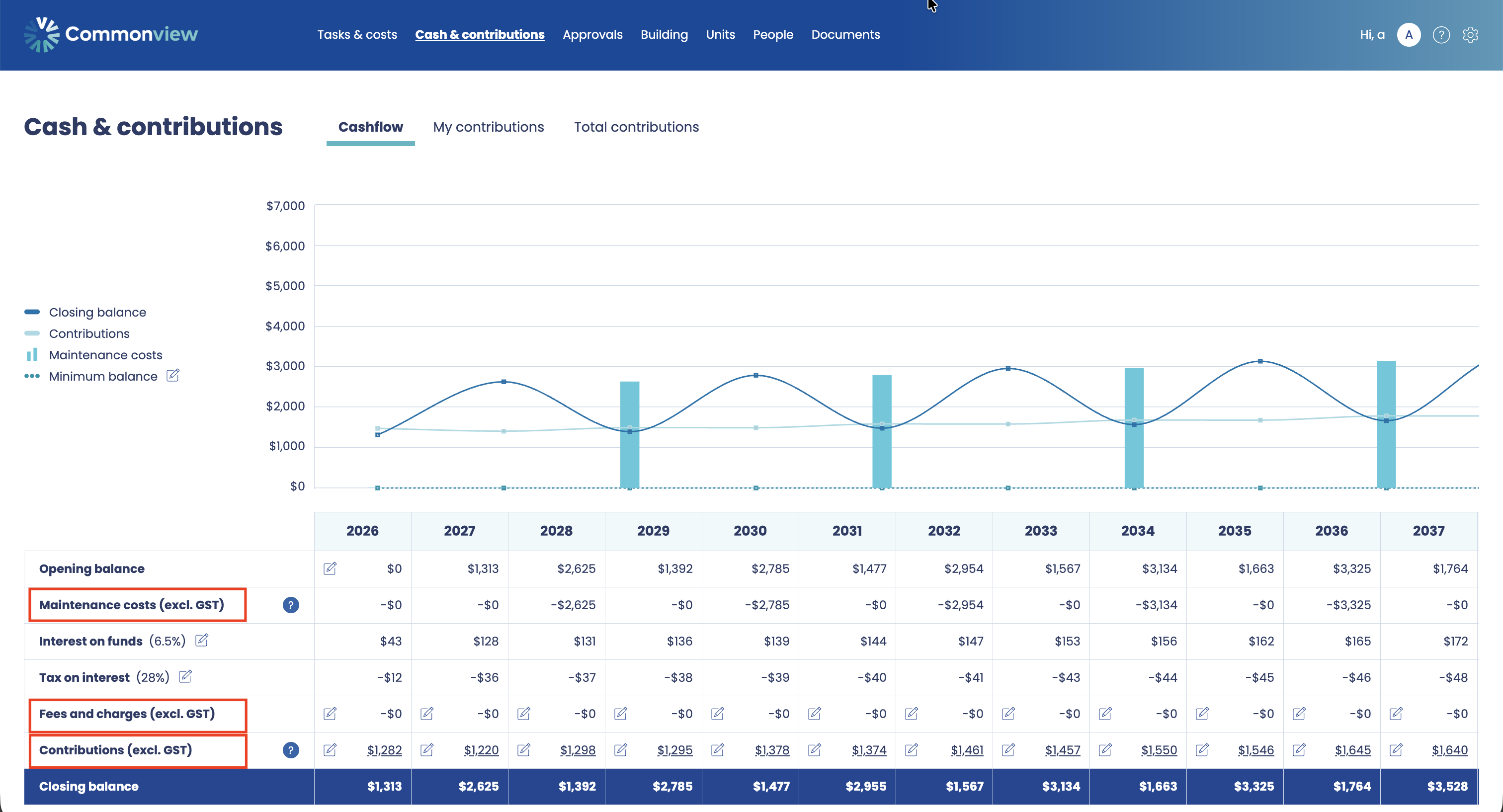
Body corporates registered for GST
For GST registered body corporates, maintenance costs, fees and contributions do not include GST when determining the impact on cashflow. This is because the GST component that a body corporate would pay out for maintenance work will be offset against the GST they charge on the contributions, and therefore GST is not recognised as an expense applied to the maintenance fund.
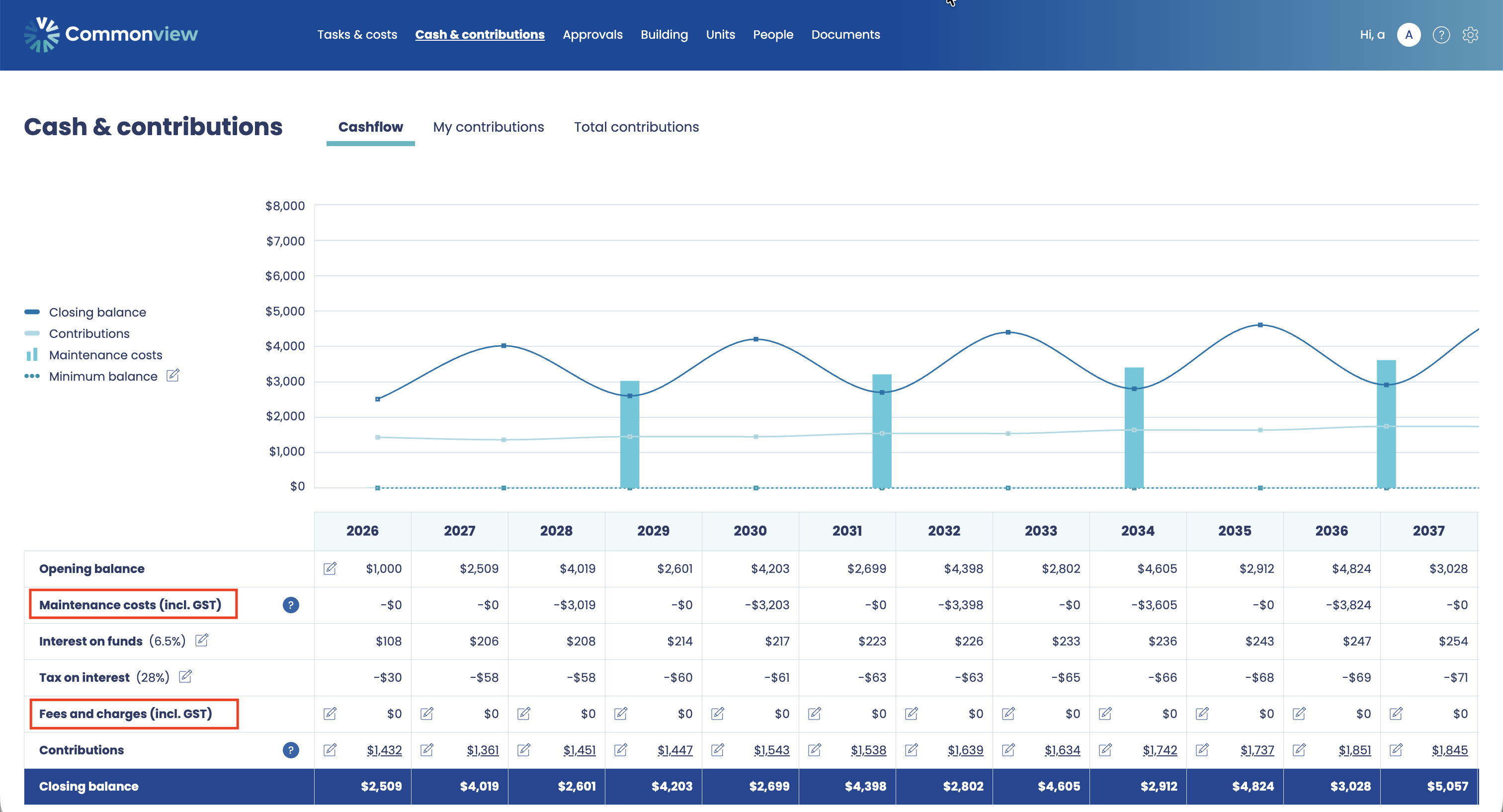
Body corporates registered for GST
For body corporate that are not registered for GST, the GST component of any maintenance costs or fees is recognised as a real expense against the maintenance fund, and therefore is included in the cashflow calculations.
GST and contributions
Commonview calculates contributions differently depending on whether the body corporate is registered for GST or not.
Body corporates registered for GST
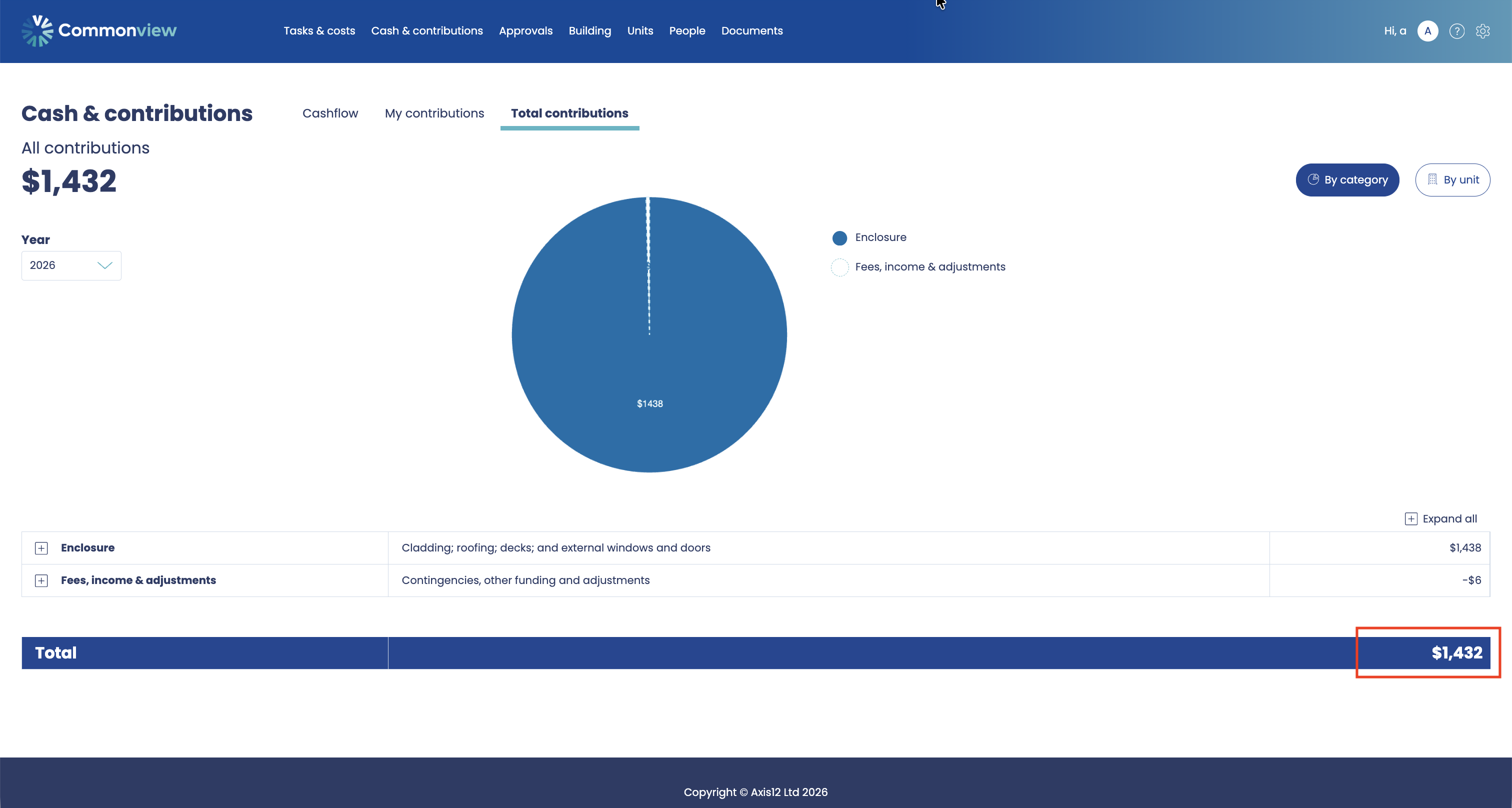
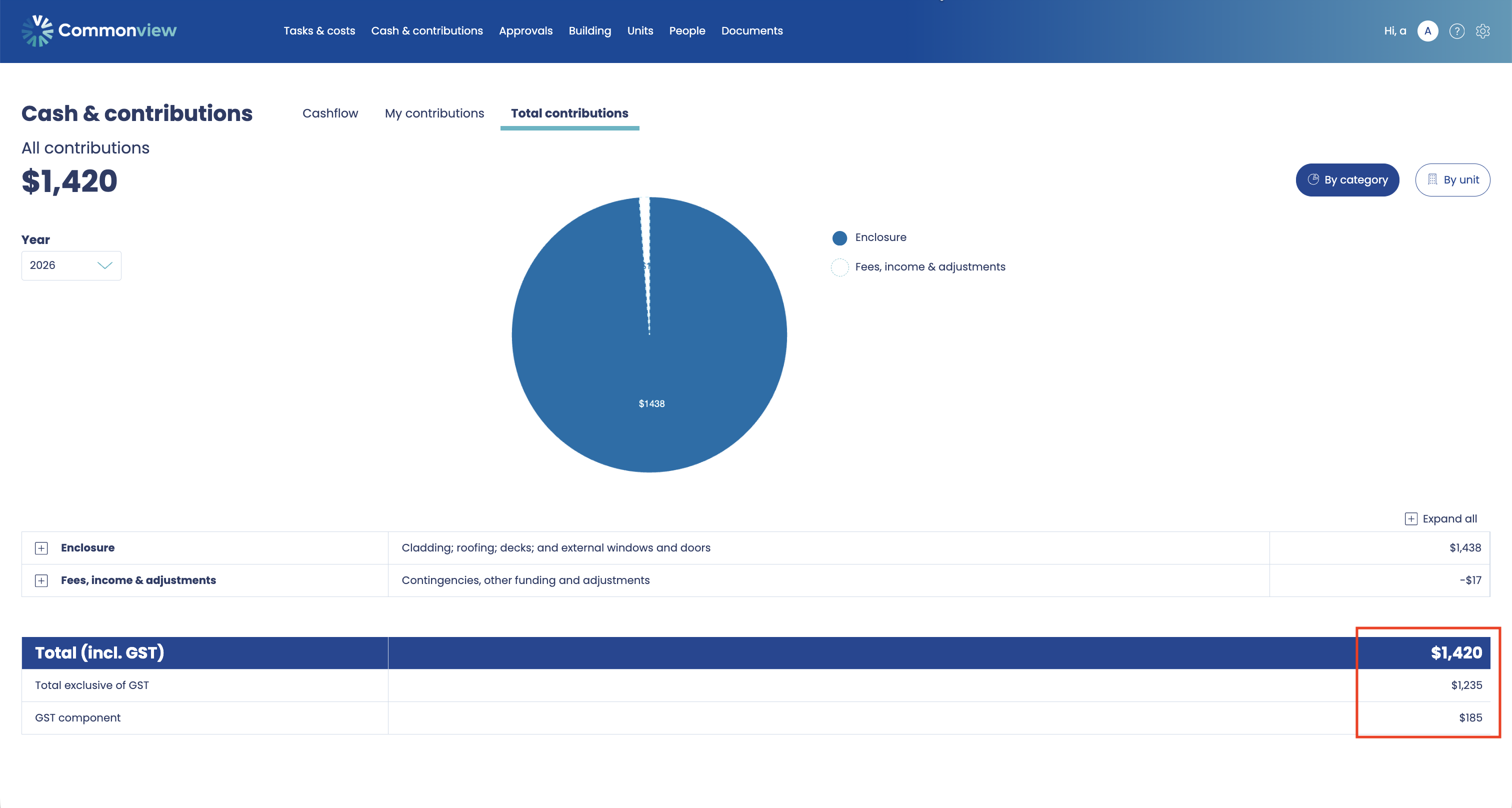
Commonview will use the GST exclusive costs to calculate contributions. GST will then be added to the final contribution amounts to be invoiced.
CONTRIBUTIONS = PROVISIONS (excl GST) - INTEREST + TAX + FEES (excl GST) +- ADJUSTMENT
The total contribution amount will be displayed inclusive of GST, and include a breakdown of the GST component.
Body corporates NOT registered for GST
Commonview will use the GST inclusive costs to calculate contributions, as the GST amounts are recognised as an expense.
CONTRIBUTIONS = PROVISIONS (incl GST) - INTEREST + TAX + FEES (incl GST) +- ADJUSTMENT
The total contribution amount will be shown without any GST applied.